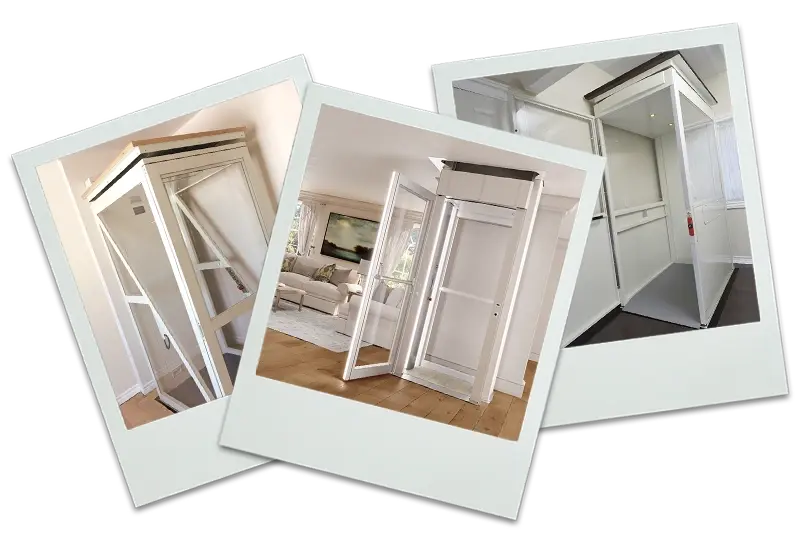
A shaftless home elevator is a compact residential lift that travels between two floors of a home without requiring a traditional elevator shaft or hoistway. Although the term "shaftless elevator" is commonly used by homeowners and in online searches, these products are more accurately described as through-floor lifts. The lift travels through an opening in the floor, carrying passengers between two levels of the home.
What Is a Shaftless Home Elevator?
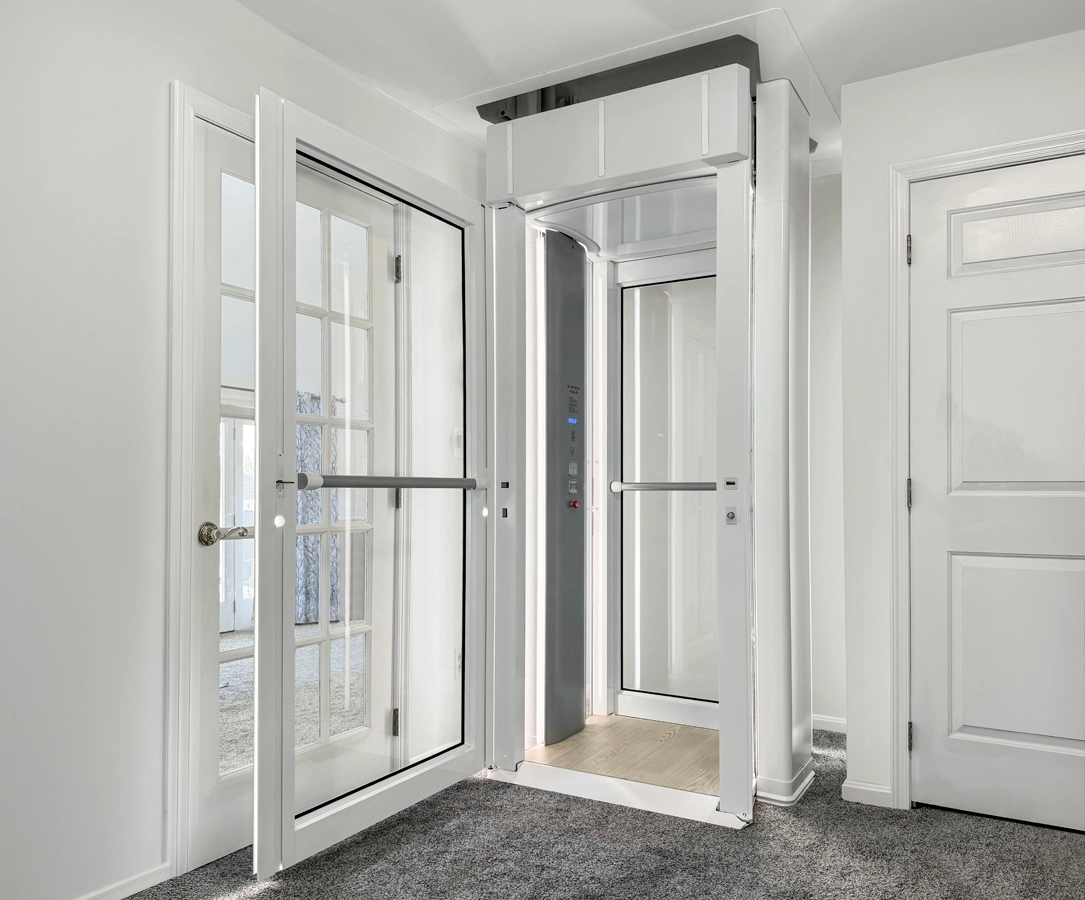
How Does a Shaftless Elevator Work?
Unlike a traditional home elevator, which travels inside an enclosed hoistway, a shaftless elevator typically has a self-contained structure. When the lift moves from one level to the other, it passes through a specially prepared opening in the floor.
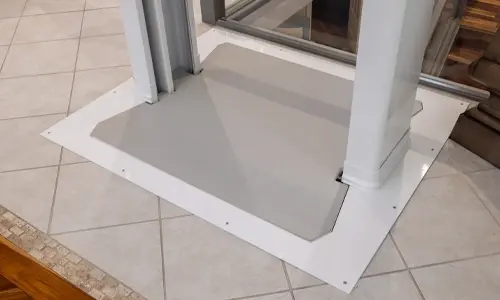
When the lift is at the lower level, the floor opening on the second level is protected by a floor plug. The result is a compact installation that does not require construction of a full elevator shaft running from floor to floor.
This is why the term shaftless elevator has become popular: from a homeowner's perspective, the most noticeable difference is that there is no conventional elevator shaft.
Is a Shaftless Elevator Really an Elevator?
The terminology can be confusing. People frequently use "shaftless elevator" when searching for a small residential elevator that can be installed without a hoistway. However, many products fitting this description are technically classified as through-floor lifts rather than conventional residential elevators.
An important operational difference is that a shaftless elevator operates using continuous pressure (push-to-run buttons). Traditional home elevators usually operate automatically — you press the button once and the elevator moves.
For homeowners, the more useful distinction is often how the product is installed and how it can be used.
Where Can a Shaftless Elevator Be Installed?
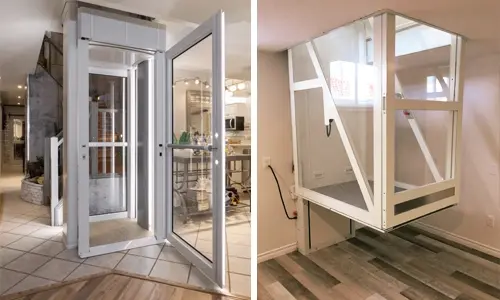
Shaftless elevators are designed for homes where access is needed between two levels. By code, a through-floor lift cannot travel more than 2 levels. Depending on the product and home layout, they may be installed in locations such as a living room, hallway, bedroom or other suitable area.

Because there is no traditional hoistway, installation can require less construction than a conventional home elevator. This can make a shaftless elevator particularly appealing when adding accessibility to an existing home.
Some models are also designed to accommodate a wheelchair user, while others are intended primarily for standing or seated passengers. Size, capacity and available features vary by model.
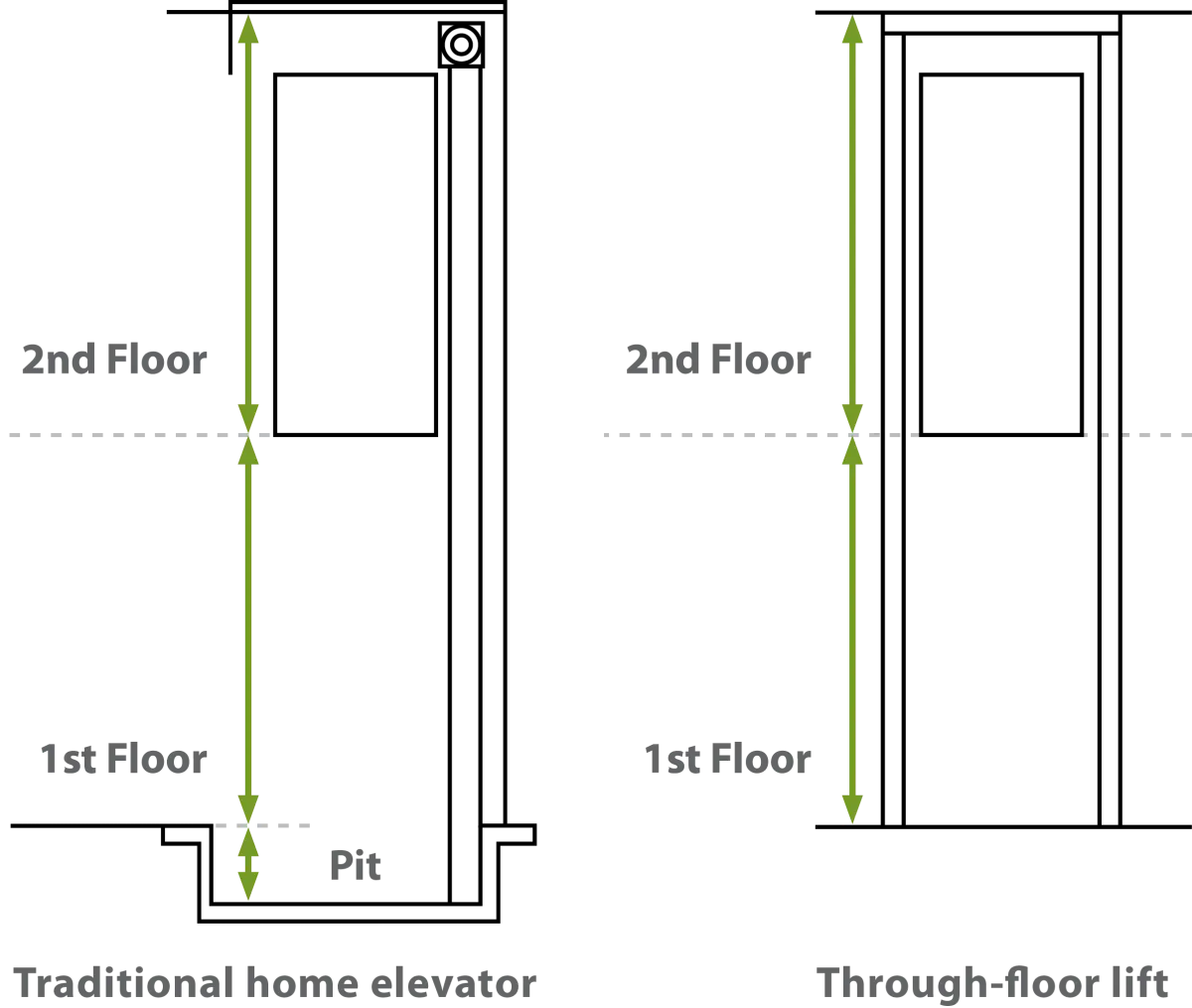
Shaftless Elevators Do Not Require a Pit
Traditional home elevators require a pit below the elevator, and the depth required varies by model. Shaftless elevators do not need a pit. This makes installation easier and less costly.
Shaftless Elevator vs. Traditional Home Elevator
The biggest difference is the hoistway. A traditional home elevator generally operates inside a dedicated shaft and may be designed to serve multiple floors. A shaftless elevator is typically a more compact solution designed to travel between two levels.
A shaftless elevator can be a good option when the goal is to improve accessibility while minimizing the amount of structural construction required. A traditional home elevator may be preferable when serving more than two floors, or when a larger elevator cab and a more conventional elevator configuration are desired.
How Much Does a Shaftless Elevator Cost?
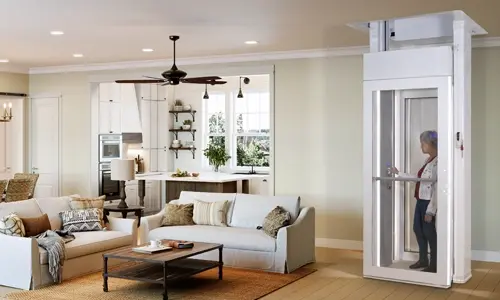
Because a shaftless elevator does not require a hoistway or a pit, it is generally the lower-cost way to add a residential lift to an existing home. A two-stop shaftless elevator such as the Savaria Luma starts at approximately $30,000 USD installed, while a traditional home elevator with a constructed hoistway typically costs more.
Which Shaftless Elevator Is Right for You?
Compare Savaria Through-Floor Lifts